Today's Engine Movement

The industry has made dramatic advances in engine technology. Over the last 12-15 years, manufacturers have gone to smaller engines and paired them with turbos. The theory is to give owners the fuel efficiency of the smaller engine, but gaining performance a turbo delivers. The old GMC Canyon offered a 5 cylinder engine for the same idea of fuel efficiency/performance. Volvo had a turbo 5 cylinder in its lineup for decades to one up any competitor.
In 2010, General Motors debuted its new 2.4L engine with Ecotec technology for Buick, and a 6.0L V8 hybrid for the Yukon. Looking back, GM was way ahead of its time, but these engines flopped because the consumer wasn’t ready for this idea. I know because I sold Buick and GMC at that time, and we couldn’t move a 2.4L and the idea of a hybrid Yukon terrified people with maintenance questions.
Scientific research of human’s impact on the climate further pushed manufacturers to the limit of engine and transmission technology. It also pressured the extinction of high performance cars with a V8, V10 or V12. Over the last 10 years, we saw the breakthrough of battery technology assisting engine performance. A battery delivers instant power and can aid the engine to work less for better MPGs. Toyota has had hybrid technology for decades in the Prius, but companies never thought to apply batteries in a performance oriented concept. McLaren, Porsche, and Ferrari have hyper cars with battery technology AND that big V engine.
This hyper car influence made its way down to the domestic market. In 2019, FCA (now Stellantis) debuted its eTorque technology in RAM. The battery was to help the 5.7L Hemi with instant power and improve fuel mileage, it really helped in one of those. In 2022, 2024 and 2025, Toyota launched its new engines for Tundra, Tacoma and 4Runner in its i-Force Max. A turbo engine with hybrid technology for the best of all worlds of performance, MPGs, and maximum efficiency.
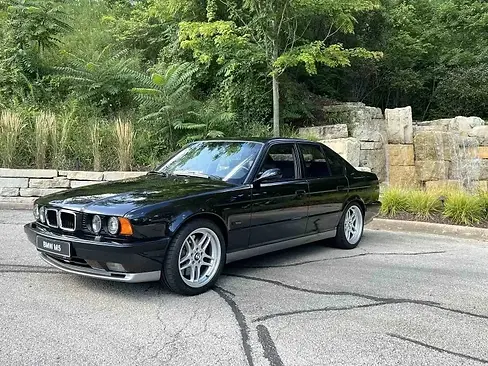
This new tech movement in cars has been…nice, I guess. I’m now that old guy complaining about today’s new music and still listening to my 80s playlist. The days of a natural aspirated engine are all but gone. A majority of engines have a turbo, battery, or both. The S Line of Audi, Mercedes’ AMG and BMW’s M Performance are not the same anymore. Those badges meant the car had a bad ass V8, at the least, and delivering 400 horsepower. Road and Track would have a yearly comparison of those 3. Video games like Need for Speed brought the love of performance to us kids.
It's not just nostalgia, but engines today sound like a freakin’ lawn mower. These smaller 4 cylinders in SUVs and V6 engines in full size trucks sound terrible. Turn the radio down and merge on the highway, and tell me otherwise. Wait for that turbo to kick in when the RPMs are nice and high, and tell me you don’t hear a lawn mower. A good transmission helps, but it doesn’t solve the noise of these engines. I will take VW’s old turbo in the Jetta over today’s, all the time. It's the exhaust notes that make driving fun, that’s why Stellantis is resurrecting the Hemi and other V8s. Enthusiasts want to hear that rumble of performance, not a whine.
This excites me about tomorrow’s car. I think we’re going to see the big V8s coming back, AND maybe the 6 cylinder. In fact, Stellantis launched its Hurricane engine a couple of years ago, and it rocks (see my Jeep blog). This inline 6 engine has twin turbo chargers for incredible performance numbers. Jeep will be debuting its class 4 Hurricane for Grand Cherokee, an inline 4 with a turbo charger, in 2026. Key word here is, inline engines. BMW has had its 3.0L inline 6 for almost 100 years (1933). RAM’s Cummins engines are a diesel inline 6 with a turbo charger. Jeep’s legendary 4.0L of the late 1980s-early 2000s was an inline 6. Why an inline engine? The layout of the cylinders mean smoother operation for a smooth ride, smoother means quieter, AND inline engines typically deliver better torque. Longevity is the byproduct of these things. That Jeep 4.0L was notorious for running over 300k miles. I’ve talked to car transporters that drive a RAM 3500 all day, with over 600k miles while towing. Do I need to say more about BMWs engine? When I see a car has an inline 6, I’m all in, and it looks like Stellantis is pushing this movement. I would love to see the Hurricane put into the Wrangler, and drop the crappy 4 cylinder turbo. I know Hemi fans are excited this engine is back, but give me a Hurricane lineup in all Jeeps and RAM.